
THE SHORT ANSWER
A full pool remodel in North Texas generally costs $30,000 to $60,000, with resurfacing alone usually falling between $6,000 and $15,000. Finish choice, waterline tile, coping, and any water features drive the range, and bundling them while the pool is drained is the most cost-effective approach.
A pool that's chipped, dated, or losing its finish goes from the best feature in the backyard to the most obvious eyesore. The good news is that a thoughtful remodel can fix the problems and reset the look without the cost of building new. The harder part is understanding what the pieces actually cost, because a pool remodel is really several projects that can happen together: resurfacing the interior, refreshing the waterline tile, replacing the coping, and adding water features. Here's how each one factors in, and the material calls we'd make along the way.
A note on pricing: the figures here are market estimates drawn from current 2026 North Texas and Texas cost data, meant for budgeting orientation. They are not PROvision quotes. Every project varies with site conditions, materials, and scope, so the best number always comes from a free on-site estimate.
What Does a Pool Remodel Cost?
A complete pool remodel typically runs $30,000 to $60,000, with the final number shaped by your pool's size, the finish you choose, and how many of the pieces below you tackle at once. Resurfacing on its own — the most common single project — usually falls between $12,000 and $20,000. A broader upgrade that refinishes the interior, replaces tile and coping, and addresses any equipment in one go sits higher, but it also delivers a pool that feels genuinely new rather than patched.
The reason bundling matters so much comes down to where the money goes, which is the next thing worth understanding.
Resurfacing: Choosing the Right Finish
Resurfacing replaces the interior layer that keeps your pool watertight and comfortable, and the finish you pick drives both the price and how the pool ages. This is also where we have the strongest opinions, because the wrong finish can look beautiful on day one and disappoint within a couple of seasons.
Plaster, Quartz, and Pebble
Standard white plaster is the budget-friendly starting point and a perfectly good choice for a clean, classic look. Quartz finishes add durability and a richer surface, and pebble finishes sit at the top for longevity and texture, often lasting well over a decade and a half with proper care. As you move up that ladder, you're paying for a surface that lasts longer and resists wear better, which is frequently worth it on a pool you plan to keep.
A Recommendation on Color
If you want a colored finish, choose carefully. Dark plasters in particular often reveal mottling — a blotchy, uneven look — as they cure and age, and homeowners who fell in love with a deep blue or charcoal sample are sometimes unhappy with how it actually turns out. For upgraded plaster finishes we generally recommend a white-based quartz or marcite, or upgrading to a minipebble plaster, both of which hold their look far more reliably. It's the kind of guidance that's easy to give before the work and impossible to undo after.
Waterline Tile
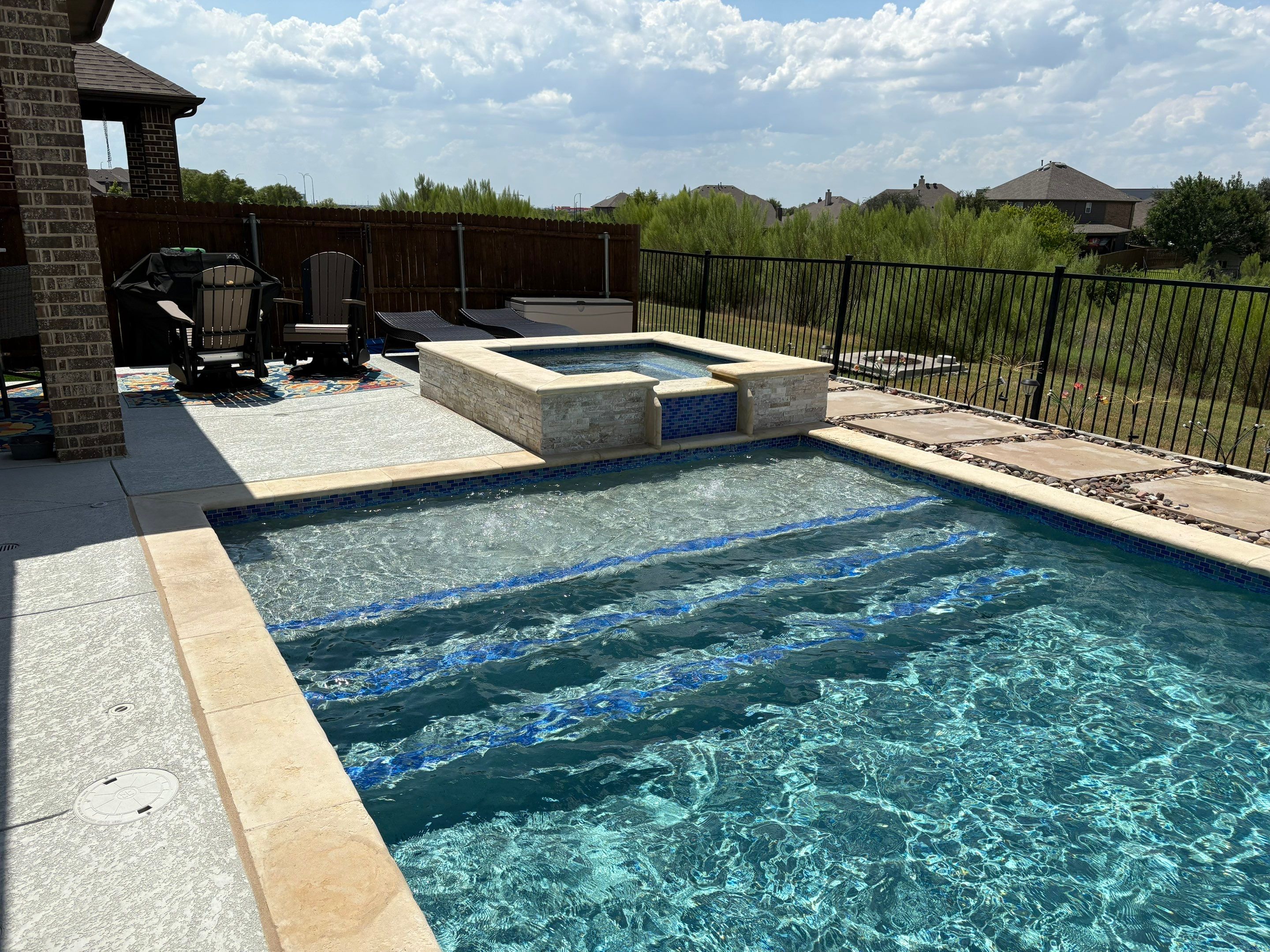
The tile at your waterline isn't just decorative — it takes the brunt of the buildup and staining that would otherwise yellow the surface, so it's doing real work. Replacing or refreshing it during a remodel sharpens the whole pool's appearance for a relatively modest cost. A popular middle path for homeowners who love the look of a fully tiled pool without the price is to run tile at the waterline and use a plaster or quartz finish below it, getting most of the visual impact for a fraction of the cost.
Coping
Coping is the protective stone cap around the pool's edge — it finishes the look and keeps water from working its way behind the wall. Replacing tired coping is one of the higher-impact visual upgrades in a remodel, especially paired with fresh tile and decking.
One material caution that matters a great deal in Texas: if you have a saltwater pool, be deliberate about coping material. Soft stones like some flagstone and limestone, such as Leuders, can pit and deteriorate under steady salt exposure. For saltwater pools we typically point homeowners toward travertine rated for it or concrete coping, which stand up to the conditions far better. Picking the pretty stone without asking how it handles salt is a classic way to end up redoing the edge in a few years.
Water Features
Water features are where a remodel stops being a refresh and becomes a transformation. Sheer descents lay down a smooth, glass-like sheet of water for a clean, modern look. Scuppers send narrow, soothing streams from a raised wall. Stone waterfalls bring a natural, resort feel, and water bowls — especially paired with fire — turn the pool into a showpiece after dark. If you're weighing which to include, we walk through five pool water features worth adding and where each one shines.
Because these features involve plumbing and sometimes structural work, the time to add them is during the remodel, while the pool is already drained and the crew is already mobilized. Trying to add a water feature later, as a standalone project, means paying again for much of the setup you've already done. Plan them in from the start, even if budget means building toward them.
Why Bundling Saves Real Money
Here's the thread running through everything above: a huge share of a pool remodel's cost is the prep — draining the pool, chipping out old surfaces, adjusting plumbing, and mobilizing a crew. Do those things once, and you can resurface, retile, recoping, and add features on a single setup. Do them four separate times across four separate years, and you pay for that prep four times over. Bundling isn't just convenient. It's usually the single biggest lever on the total cost.
Protect the Investment: Water Chemistry
A remodel is only worth it if the new finish lasts, and the fastest way to ruin a fresh surface is unbalanced water. This isn't a side note — most plaster warranties explicitly require proper water maintenance, and consistently off pH can void your coverage. Low pH etches the surface into a rough, worn texture; high pH scales it with calcium deposits and discoloration. Either way, the damage lands on you rather than the warranty.
Keeping pH in the 7.4 to 7.6 range with regular testing is a small habit that protects a significant investment — our guide on how to raise or lower your pool's pH covers exactly how. If you're remodeling, it's the perfect moment to get the whole system dialed in so the surface you just paid for stays beautiful for its full lifespan.
Frequently Asked Questions
How much does a pool remodel cost?
A full pool remodel typically runs $30,000 to $60,000 depending on size, finish, and scope, while resurfacing on its own usually falls between $12,000 and $20,000. Combining projects while the pool is already drained is the most cost-effective way to remodel.
What pool finish should I choose?
For upgraded plaster finishes we recommend a white-based quartz or marcite, or a minipebble plaster, because dark quartz plasters often reveal mottling that looks blotchy over time. Around saltwater pools, choose coping carefully too, since soft stone can pit from salt exposure.
Why does pH matter so much after a remodel?
Most plaster warranties require balanced water chemistry. Low pH can etch a new surface and high pH can scale it, and consistently unbalanced water can void the warranty outright, leaving any surface damage on your dime. It's the easiest way to protect a fresh finish.
How long does a pool remodel take?
A straightforward resurface can take about a week, while a larger remodel adding tile, coping, and water features often runs two to three weeks. The pool only needs to be drained once, which is why bundling work saves both time and money.
When is the best time to remodel a pool?
The cooler off-season is ideal. Crews are less booked, scheduling is easier, and the work wraps up well before you want to swim, so a fresh pool is ready the moment North Texas heat arrives.
Work With PROvision
At PROvision Outdoor Living, we handle complete pool remodels across Southlake, Colleyville, and North Texas — resurfacing, tile, coping, and water features — and we'll steer you toward the finishes and materials that actually last in our conditions, all backed by a lifetime workmanship warranty. Explore our pool remodels page to see what's possible.
Book a free consultation or call us at (817) 880-7224.



.png)