

THE SHORT ANSWER
A turnkey patio cover in North Texas typically costs $100 to $150 per square foot in 2026, with engineering, permits, electrical, and finish work included. A 300-square-foot cover therefore lands roughly between $30,000 and $45,000. Quotes far below that range usually exclude work that gets added back later.
Ask three contractors what a patio cover costs and you'll get three very different numbers. One quote feels reasonable, the next feels like it belongs on a different house entirely, and somewhere in the confusion you start to wonder whether anyone is telling you the whole story. The truth is that a patio cover isn't a single product with a single price. It's an engineered structure, and what it costs depends on how it's built, what it's built from, and how much of the real work is actually in the number you're quoted.
Below is a straight answer, what actually moves the price, and how to read a bid so a lowball number doesn't cost you more in the end.
A note on pricing: the figures here are market estimates drawn from current 2026 North Texas and Texas cost data, meant for budgeting orientation. They are not PROvision quotes. Every project varies with site conditions, materials, and scope, so the best number always comes from a free on-site estimate.
What Does a Patio Cover Cost?
A turnkey patio cover — meaning the price covers everything from engineering and permits to electrical and finish work — typically runs $100 to $150 per square foot in the North Texas market. That figure exists for a reason: it's the all-in number, with nothing left to surprise you on an invoice later. When you see a quote far below it, the gap is almost never efficiency. It's usually work that got left out of the estimate and quietly added back as the project goes.
To put that in real terms, a modest 12-by-16 cover of around 200 square feet generally falls in the $20,000 to $30,000 range, while a larger 300-square-foot structure built to shelter a dining area and an outdoor kitchen runs closer to $30,000 to $45,000. The spread inside those numbers comes down to the details below, not guesswork.
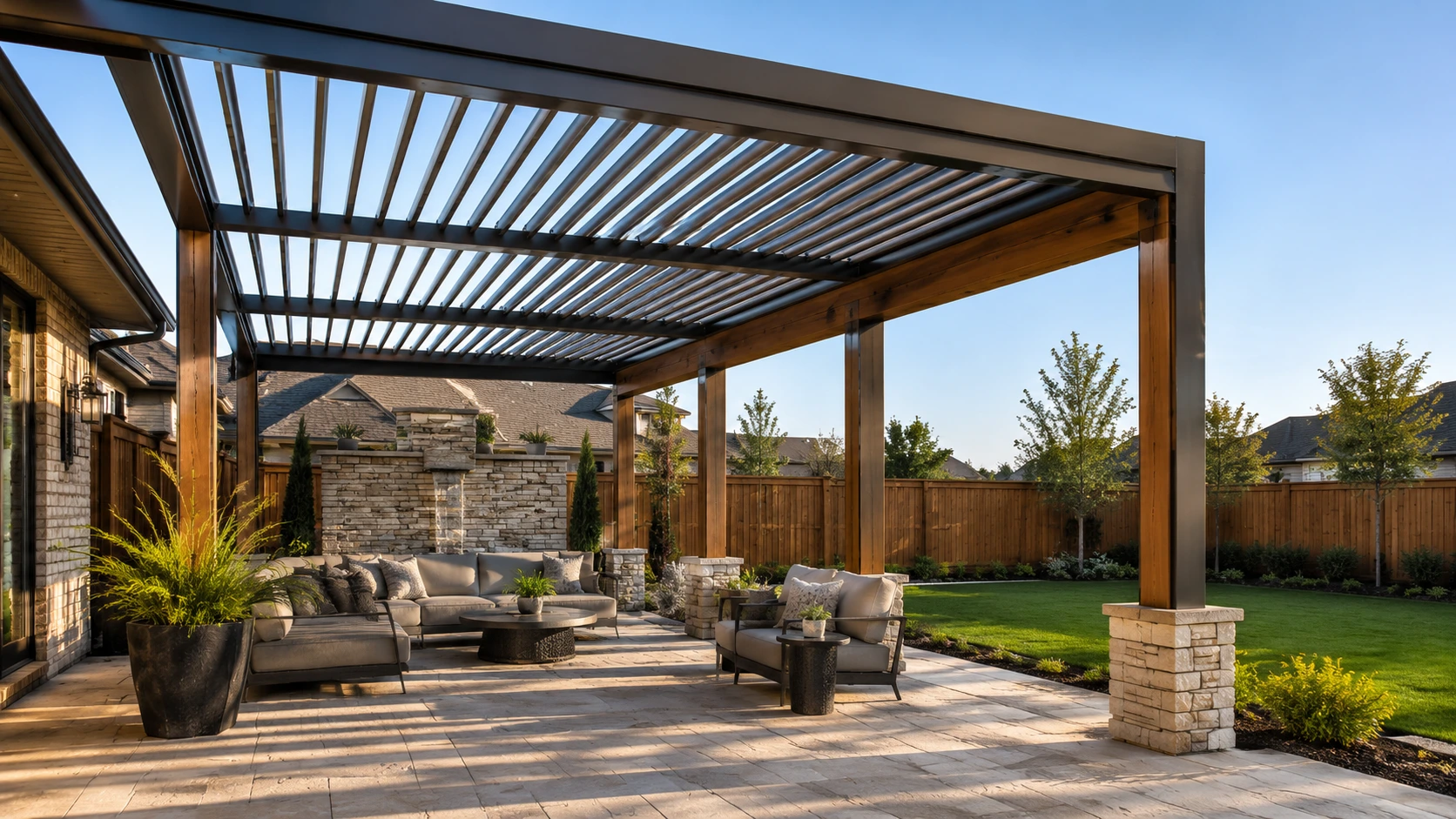
A patio cover is a fully roofed structure, usually attached to the home and built to read as a natural extension of your roofline. Done right, it gives you complete protection from sun and rain, and the recessed ceilings can hide the wiring and gas lines for fans, heaters, lights, and speakers, so the finished space looks clean rather than cobbled together. That level of integration is part of what separates a real patio cover from a bolt-on shade panel — you can see the range of what we build on our patio covers and shade structures page — and part of what you're paying for.
What Drives the Price Up or Down?
Size is the obvious lever, but it's rarely the one that surprises people. The details below are where budgets actually shift, and where a thorough builder earns the quote.
Engineering and Permits
This is the line item the cheapest bids love to skip. An attached patio cover ties into your home's structure and almost always requires a permit and engineering, especially once electrical or gas is involved. Skipping it isn't a savings, it's a liability. Unpermitted work can stall a future home sale, complicate an insurance claim, and in a worst case mean tearing finished work back out after an inspector flags it. A turnkey price folds this in from the start so it's handled correctly the first time.
The Foundation Underneath It
North Texas sits on expansive clay soil that swells when it's wet and shrinks when it's dry, moving the ground under everything you build. A patio cover's posts have to be footed properly for that movement, and if your existing slab needs reinforcement to carry the structure, that's real work with real cost. It's also exactly the kind of thing a hurried contractor waves off until it cracks. We'd rather address it on day one than explain it to you in year two.
Materials and Roof Style
What the cover is built from changes both the look and the number. Here's how the common paths compare in our market:
Wood
Cedar and stained wood deliver the warm, architectural look that suits a lot of North Texas homes, and they integrate beautifully with a matching roofline. Wood asks for a little upkeep over time, but for many homeowners the character is worth it.
Aluminum and Insulated Panels
If low maintenance is the priority, insulated aluminum is hard to beat. The panels block rain entirely and cut the heat radiating down onto the space below, which matters when the slab underneath would otherwise bake all afternoon. It reads a little more contemporary and asks almost nothing of you once it's up.
Electrical, Lighting, and Comfort Features
Ceiling fans, recessed lighting, outlets, heaters, and speakers are what turn a covered slab into a room you actually use after dark and through the shoulder seasons. They also require a licensed electrician and add to both the build and the permit. Worth it, in our experience, but worth pricing honestly up front rather than discovering mid-project.
Drainage and Gutters
When a Texas storm dumps an inch of rain in twenty minutes, the water coming off your new roofline has to go somewhere that isn't your foundation or your landscaping. Proper gutter integration is a small line item that prevents large headaches, and leaving it off a bid is a classic way to make a number look lower than the job really is.
Should You Choose a Patio Cover or a Pergola?
If the price gives you pause, it's worth asking whether a patio cover is even the right structure for what you want. A pergola typically runs about 50 to 60 percent of the cost of a comparable patio cover, because the construction is simpler and it doesn't tie into your roofline the same way — we break that decision down fully in our guide to the difference between a pergola and a patio cover. The trade-off is honest: a pergola gives you beautiful, defined shade and architectural dimension, but even with add-ons it isn't truly weather-tight.
A patio cover is the call when you want year-round, rain-or-shine protection and the long-term resale value that comes with it. A pergola is the call when you want to define and elevate a space without the larger investment. If you like the open look but still want control over sun and rain, it's worth reading whether a louvered pergola is worth the upgrade, which sits between the two. Neither is the wrong answer. They're answers to different questions, and a good builder should tell you which question you're actually asking.
Is a Patio Cover Worth It in North Texas?
In a climate that runs past 100 degrees for a good stretch of the year, a patio cover is one of the few improvements that genuinely changes how much of your home you can use. It pulls the back of the house into play for months that would otherwise be too hot or too wet to enjoy, it protects your furniture from sun and storms, and it reads to buyers as finished, livable square footage rather than an empty slab. Of all the money homeowners put into a backyard, covered outdoor living is consistently among the easiest to justify.
The one caveat is the same one that runs through this whole guide: the value only holds if it's built right. A cover that's underfooted for our soil, under-drained for our storms, or unpermitted for resale isn't a bargain at any price. It also pays to plan the cover as part of the whole backyard rather than in isolation — our guide to planning your outdoor living space walks through how to size and place it alongside everything else before you build.
Frequently Asked Questions
How much does a patio cover cost in North Texas?
A turnkey patio cover with engineering, permits, electrical, and finish all included generally runs $100 to $150 per square foot in the DFW area. Quotes well below that usually leave out work that reappears later, so always ask exactly what a number covers.
Why is a patio cover more expensive than a pergola?
A patio cover is a fully roofed structure that ties into your home and provides complete weather protection, which means more engineering, permitting, and finish work. A pergola is simpler and more open, so it typically costs 50 to 60 percent of a comparable patio cover, but it isn't weather-tight.
Do I need a permit for a patio cover in Texas?
Almost always, especially for an attached cover or anything involving electrical or gas. Permitting protects you at resale and with insurance, and a reputable builder handles it for you rather than skipping it to shave the price.
Will Texas clay soil affect my patio cover?
It can. Our expansive clay moves with moisture, so the structure's footings must be designed for that movement and any existing slab checked for whether it can carry the load. Getting the foundation right up front is what keeps the cover from cracking or shifting.
How long does a patio cover take to build?
Most builds run a few weeks of on-site work, but the full timeline from signing to completion is often longer once engineering and the city permit process are factored in. A clear builder maps that schedule for you before starting.
Work With PROvision
At PROvision Outdoor Living, we build custom patio covers across Southlake, Colleyville, Keller, and the surrounding communities the way we'd want one built on our own home: engineered for our soil, permitted properly, and finished to last, all backed by a lifetime workmanship warranty. See what's possible on our patio covers and shade structures page when you're ready to start.
Book a free consultation or call us at (817) 880-7224.


.png)